Stricken London FX firm Argentex paid its CEO £1.1m last year
Times change. One moment, you're paying your CEO £1.1m ($1.5m) and declaring things like, "We have actively reset the business in 2024 and are well positioned for 2025 as a result." The next, you're facing margin calls, your shares have been suspended, and a rival firm is acquiring you in an emergency.
Who is your Ideal Employer in finance? 💥 Answer our survey for a chance to win $1k
Such is the situation at Argentex, the listed London 'currency management firm' which revealed yesterday that it had been hit with margin calls relating to its FX derivatives book and that it was having liquidity issues. Argentex shares were suspended. Today, the company said it may be acquired by IFX Payments.
The situation is a reminder that what is said in corporate presentations and annual reports is not necessarily related to reality, and that senior executives who are paid large amounts of money for creating "transformations" have not necessarily had the desired effect.
Argentex' annual report for 2024, issued last week, is a masterclass in bold promises, as is the accompanying presentation. Therein, Argentex claims to have introduced "future-proof solutions", to have an "integrated" approach to managing risk, to have "repositioned the business for growth," as it evolves into a broad based payments company.
Not any more, it seems.
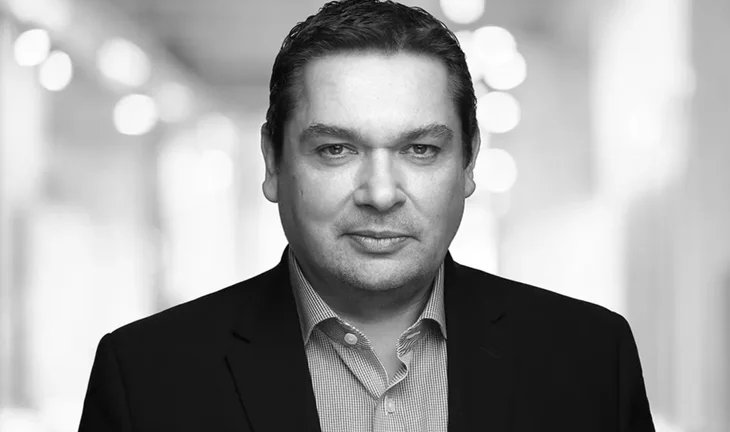
Argentex's generosity to the senior executives who failed to avoid the storm is also notable. Last year, (new) CEO Jim Ormonde was paid a salary of £392k, a bonus of £540k, a travel allowance of £97k and pension and healthcare contributions of £28k for steering the strategic transformation. Ormonde, who was once a journalist at the BBC and whose relevance to the role appears linked to his history as founder and CEO of a payments company before the financial crisis, may need to eke out last year's compensation for a while. All the more so because the 176,000 shares he owns in Argentex, which last week were valued at 42p each, are likely now worth a fraction of that amount.
It's not clear what will become of Argentex's 200 employees, around 30 of whom were added in the last few years as the firm expanded in Australia and Dubai, and who earned an average of £162k each last year. Nor is it clear what will become of Argentex's head of risk, David Blake, who joined in July 2023 after 20 years at Mizuho, where he was latterly CRO for EMEA. Sources say Blake is highly competent, and had tried to flag issues at Argentex without being heard.
In its defence, it might well be argued that Argentex had no idea that its transformation journey was about to be upended by Liberation Day and its aftermath. The firm's "seamless solutions" and "AI-driven systems for fast and digital onboarding" could still be worth something even after its liquidity dried up.
Some Argentex employees may even welcome a change of scene. Writing on Glassdoor, last year, insiders complained of "big egos" and a "dog-eat-dog" culture involving high staff turnover. "You’ll be worked like a horse for little pay and have no social life whatsoever for a good four years first," said one. Life might be easier at IFX, although that too is accused of being saturated in "finance bros" by one Glassdoor reviewer.
Have a confidential story, tip, or comment you’d like to share? Contact: +44 7537 182250 (SMS, WhatsApp or voicemail). Telegram: @SarahButcher. Click here to fill in our anonymous form, or email editortips@efinancialcareers.com. Signal also available.
Bear with us if you leave a comment at the bottom of this article: all our comments are moderated by human beings. Sometimes these humans might be asleep, or away from their desks, so it may take a while for your comment to appear. Eventually it will – unless it’s offensive or libellous (in which case it won’t.)